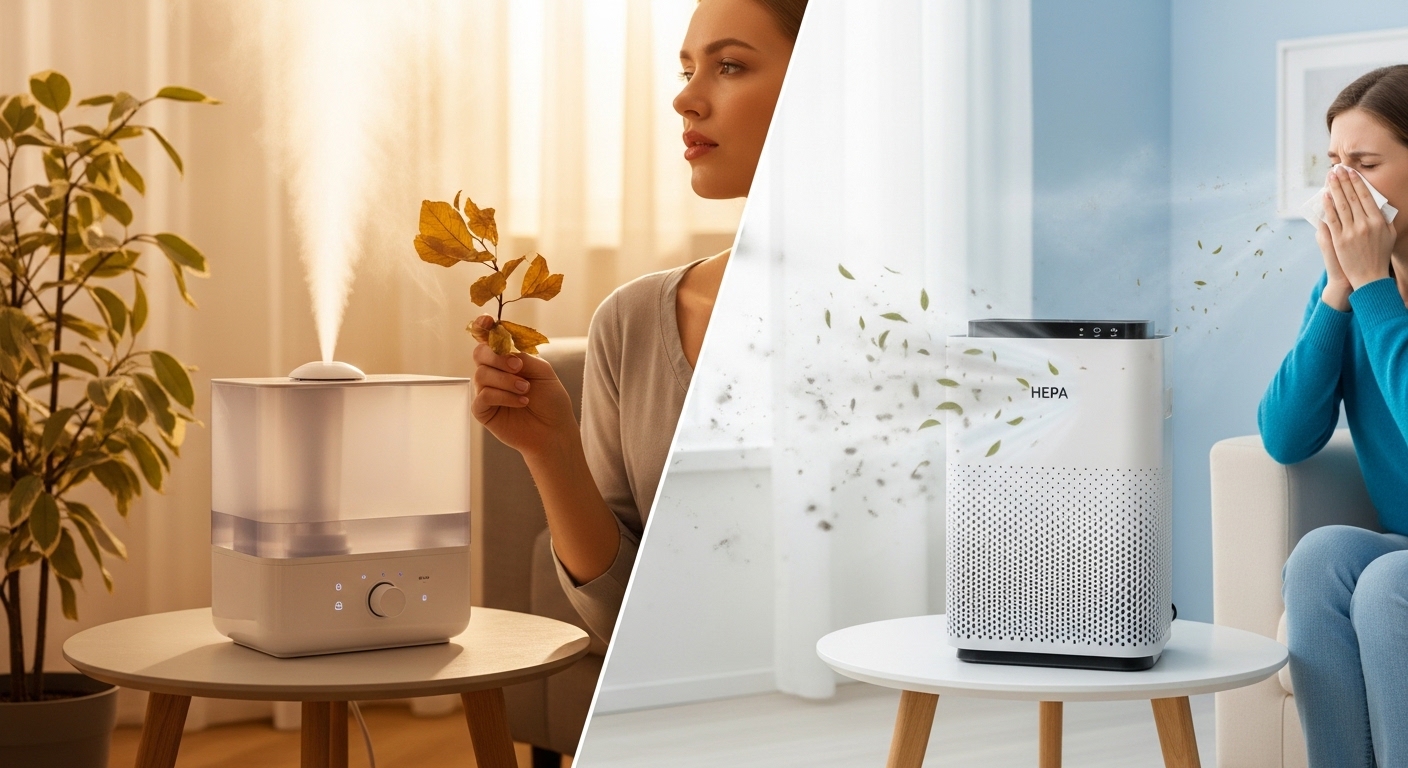
That uncomfortable “stuffy” indoor feeling usually isn’t just one problem. It’s often a mix of dry air (low humidity), airborne particles (dust/allergens), and poor ventilation—and each needs a different fix.
Disclosure: Some links may be affiliate links. As an Amazon Associate I earn from qualifying purchases.
The short version
- Dry air (dry throat, irritated nose, static, waking up parched): Humidifier helps more.
- Dust, allergies, smoke, pet dander: Air purifier (HEPA) helps more.
- “Stuffy” + dry + dusty: you may need both, but only if you control humidity correctly.
What each device actually does (no fluff)
Humidifier
Adds moisture to the air (raises relative humidity). EPA generally recommends keeping indoor humidity between 30% and 50%.
Air purifier
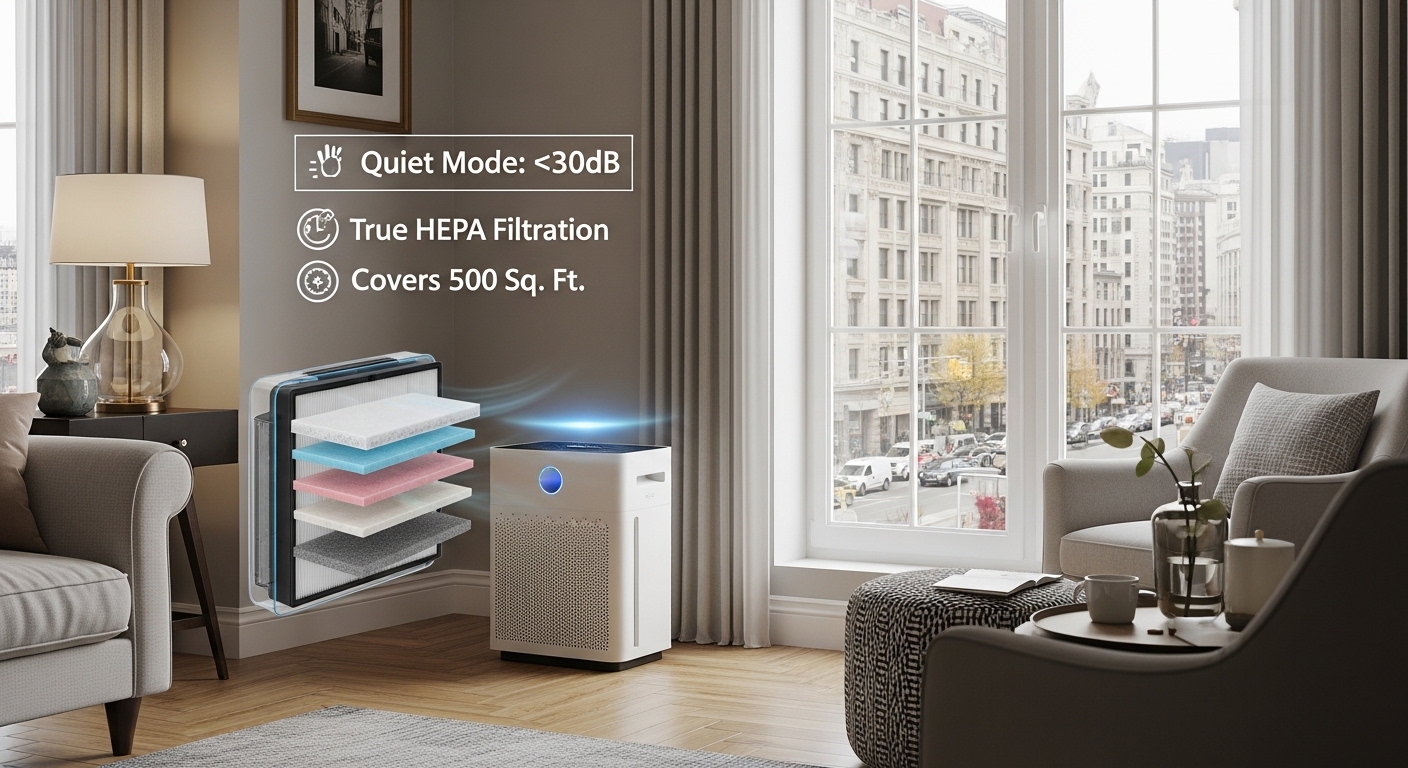
Removes airborne particles by pulling air through filters. A HEPA filter is defined to capture at least 99.97% of particles at 0.3 microns (the “most penetrating” particle size).
Key point: A humidifier doesn’t “clean” dust out of the air, and an air purifier doesn’t add moisture.
Why your room feels dry, dusty, or “stuffy”
Dry air signs (humidity too low)
Low humidity can irritate your nose/throat/sinuses and make you feel uncomfortable even if the temperature is fine.
Dusty air signs (particles in the air)
Dust, pet dander, pollen, and smoke are airborne particles—this is where HEPA filtration can help.
“Stuffy” can be either too dry or too damp (or both)
EPA notes humidity affects indoor pollutants, and high humidity increases the likelihood of mold—which can also feel “stuffy.”
When a humidifier helps more
Choose a humidifier if you notice:
- Dry throat/nose, irritated sinuses, dry eyes/skin
- Static shocks, furniture/wood feeling “too dry”
- You feel worse during heating/AC season
Target: Keep indoor humidity around 30–50% (use a hygrometer).
Don’t overdo it: EPA advises not humidifying beyond 50% because higher humidity can encourage biological growth (like dust mites/mold) and other issues.
Humidifier reality check (important)
Humidifiers can also create problems if you don’t maintain them:
- Microorganisms can grow in tanks, and some types can disperse minerals/mist into the air.
- CDC recommends emptying humidifiers daily, cleaning regularly, and letting them air dry; using distilled/boiled (cooled) water can reduce germ growth.
When an air purifier helps more
Choose an air purifier if you deal with:
- Visible dust settling quickly
- Allergy symptoms triggered indoors
- Pet dander
- Smoke or cooking odors that linger (especially if it has carbon + HEPA)
If you’re shopping, look for True HEPA performance (99.97% at 0.3 microns).
When you should use both (best “real-life” combo)
Use both if you have:
- Dry air symptoms and noticeable dust/allergens
- A living room that feels “stale” during winter heating
- Pets + dry indoor air
How to run them without making things worse
- Run the air purifier steadily (low/auto works well for daily particle control).
- Run the humidifier only as needed to keep humidity in the 30–50% range (not higher).
- Maintain the humidifier: EPA suggests daily empty/wipe/refill, low-mineral water (distilled), and regular cleaning to reduce microorganisms/mineral dispersal.
The best choice for each symptom
- Dry air + scratchy throat + static: Humidifier
- Dust + allergies + pet dander: Air purifier
- “Stuffy” + you can’t tell why: Start with measuring humidity, then add the right device:
- <30% RH → humidifier helps
- 30–50% RH but still dusty → air purifier helps
- 50–60% RH → stop humidifying; focus on moisture control/ventilation
Common mistakes (that make “stuffy” worse)
- Over-humidifying (pushing humidity too high) → can increase mold risk and discomfort.
- Not cleaning the humidifier → can spread germs/minerals through mist.
- Expecting a purifier to fix dry air (it won’t) or a humidifier to remove dust (it won’t)
Quick FAQ
Does a humidifier help with dust?
Not directly. It changes moisture levels; dust is best addressed with filtration (HEPA) and cleaning.
Can an air purifier help with “stuffy” air?
If “stuffy” is from particles (dust/smoke/allergens), yes. If it’s from low humidity, you’ll feel better by correcting humidity instead.
What humidity should I aim for?
EPA guidance commonly points to 30–50% indoor humidity for comfort/health; avoid pushing above ~50%.